Level
0
No Adoption.
AI is available. Behavior doesn't change.
What it looks like
Tools are deployed and ignored. The status quo wins by default.
Leadership in AI
I work with CHROs and executive teams whose organizations are observing AI moving faster than their leadership can adapt.

Selected clients
Engaged across executive education, leadership development, AI training, and coaching.
The Framework — PolyCognitive Leadership™
A new requirement has emerged in the past two years: the ability to drive value from AI without letting the humans around it atrophy. Across timezones and industries I have identified five levels of AI adoption — and a sixth profile that holds them together.
Most organizations sit at Level 1 or 2. The PolyCognitive Leader is the role required to move them.
AI is available. Behavior doesn't change.
What it looks like
Tools are deployed and ignored. The status quo wins by default.
People use AI. Outcomes don't move.
What it looks like
Activity goes up. Throughput stays flat. AI becomes productivity theater.
AI creates lift. Risk slips in beside it.
What it looks like
Speed climbs while control quietly erodes. The wins outpace the governance.
Tasks improve. The system stays the same.
What it looks like
AI is bolted onto legacy flows. Patchwork wins. The operating model never gets rebuilt.
The system works. The humans atrophy.
What it looks like
Judgment, skill, and curiosity erode quietly. The WALL-E paradox: a system that works only as long as nothing surprising happens.
Makes the system smarter without making the humans dumber.
The destination
Drives adoption. Captures value. Controls risk. Redesigns work. Preserves human judgment as AI scales. This is the destination — and the leadership profile most organizations now have to manufacture, fast.
“Most AI initiatives don't fail at deployment. They fail between Level 0 and Level 2 — and the leader is the bottleneck.”
Robert Blaga
Work with Robert
Each is built on the same body of work — twenty years inside leadership programs at the world’s largest organizations, and the PolyCognitive framework that came out of them. Each begins with the same conversation.
Programs for managers and senior leaders, in person or via simulation. Single-day to multi-week. The PolyCognitive framework is the spine; behavior and decision practice are the work.
For: L&D leaders, leadership academies, executive education
Designing the AI-adoption arc for an enterprise. Learning architecture, simulation infrastructure, leadership academies, and the executive cadence that gets an organization from Level 1 to Level 5.
For: CHROs, COOs, transformation leaders
45 to 90 minutes for executive offsites, board meetings, conference openers, and internal kickoffs that need a sharp diagnostic on AI and leadership. Built around the PolyCognitive framework or tailored to the question your team is sitting with.
For: CEOs, executive teams, conference programmers
Ongoing retainer with one CEO or executive team at a time. Direct access; small client list; designed to be the relationship, not the report.
For: CEOs, executive committee members
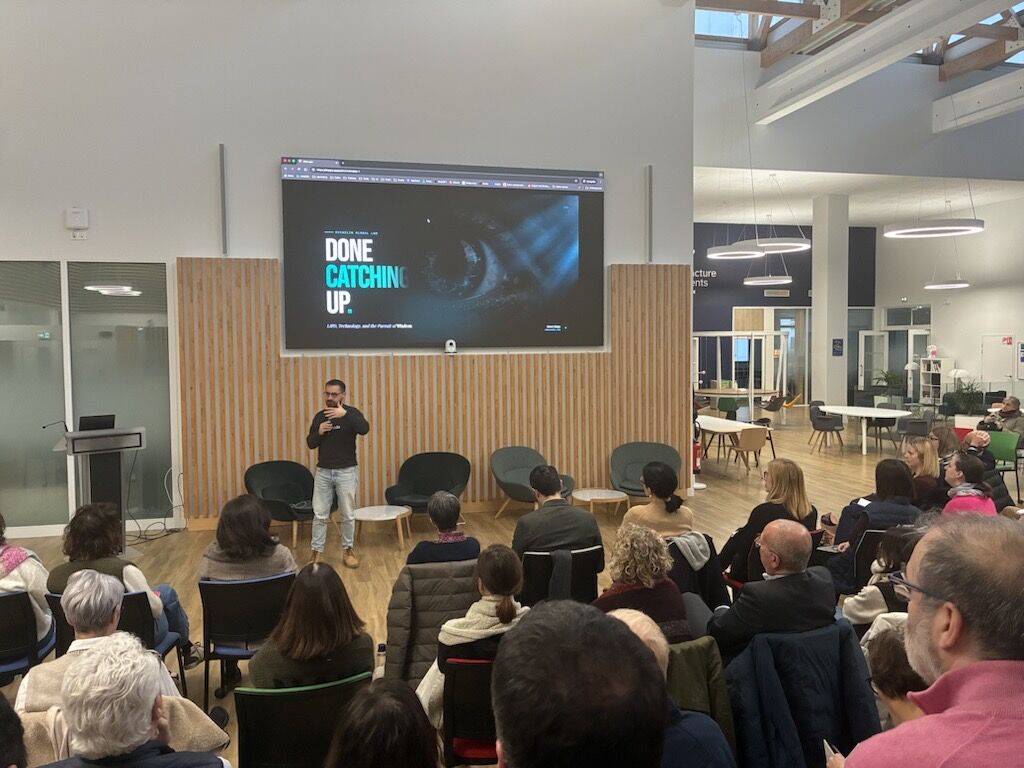
On stage
Keynotes for executive offsites, board meetings, and conference openers. Sharp, diagnostic, built around the framework or the question your team is sitting with.
Pictured · “Done Catching Up”
For senior teams
Tailored to room and stake — boardroom, leadership cohort, executive offsite. Run in person or hybrid, with options for follow-on coaching and simulation.
The framework, in practice. Two days for senior leadership teams to locate where their organization sits across the five levels, build the capability profile required at Level 5, and design the moves that get them there. Hands-on, not theoretical.
For organizations starting to scale AI, where the governance gaps and ethical risks have begun to surface. One day to build the operating principles, decision rights, and escalation paths that let AI move fast without breaking what shouldn't break.
Most transformations stall once the early wins are in: a few teams move, the operating model underneath does not. Two days for senior leadership to redesign the work, the decisions, and the structures — whether the catalyst is AI, a restructuring, a merger, or a strategic pivot — so change actually compounds.
A hands-on workshop for organizations ready to find the AI use cases that actually move their numbers. One to three days mapping the work, identifying high-leverage opportunities, and prioritizing the ones worth building. The output is a use-case portfolio executives can fund — not another strategy deck.
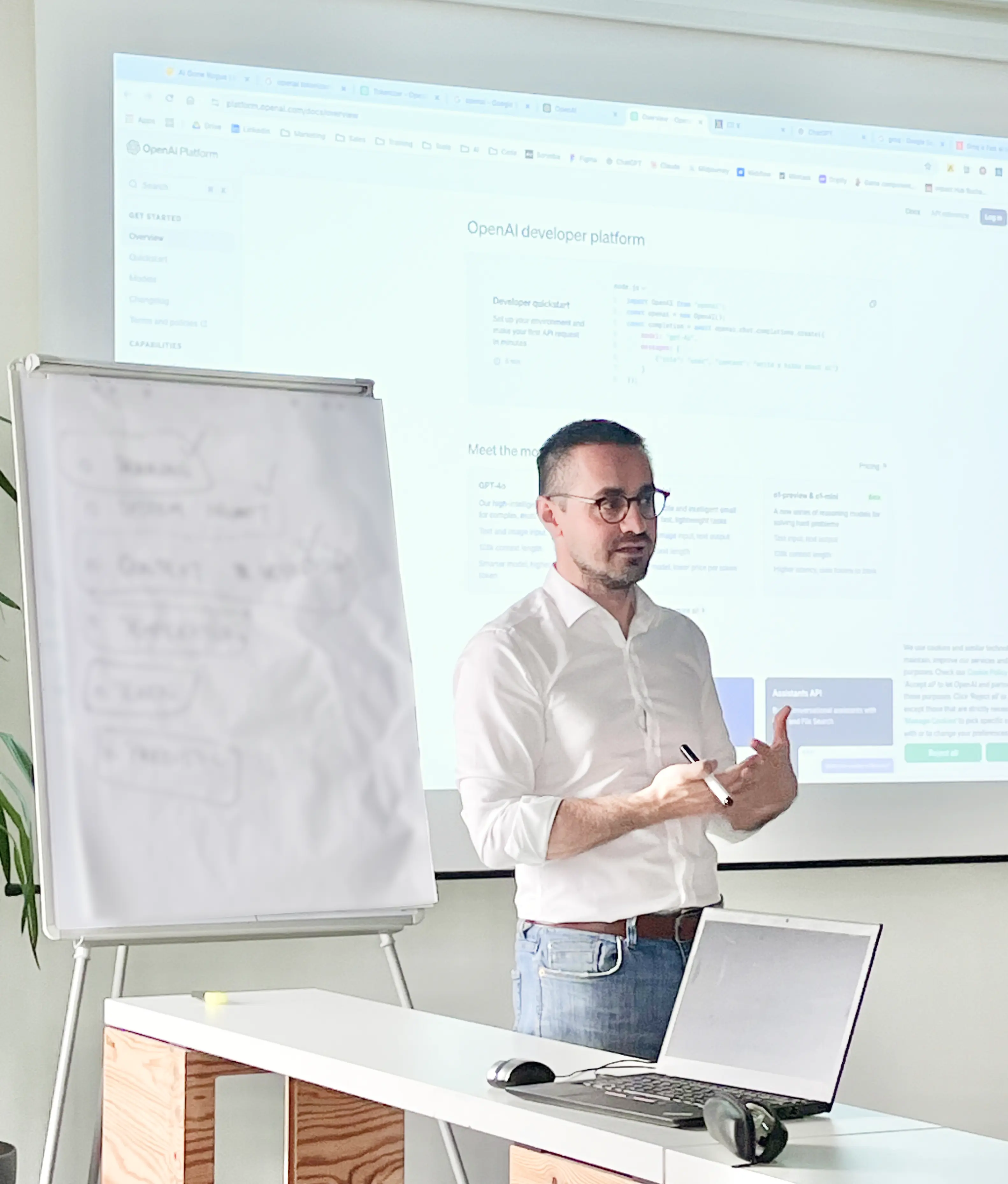
In the workshop
Most of the work happens in the room — boardrooms, leadership cohorts, executive offsites, simulation rooms. The frameworks travel; the practice is face-to-face.
Pictured · AI for senior leadership
About
Psychologist, researcher, developer. Twenty years in leadership development. Eight years in technology. The work has always run on one bet: adults change by doing, not by being explained at.
Academics build frameworks. Consultants run rooms. Vendors ship software. I do all three on purpose — which is how the PolyCognitive Leadership framework got built, and why AI didn’t catch the work flat-footed.
Operating beliefs
After twenty years in leadership development, I’ve come to believe a small number of things deeply. Held loosely enough to argue with — and tightly enough that the work runs on them.
Everything else is scaffolding.
You develop it by doing it, failing at it, getting feedback, and doing it again.
Engagement scores measure how a program felt. Behavior change measures whether it worked. These are different.
Most leadership problems are judgment problems, not knowledge problems.
They train in simulators, under pressure, with feedback. This has been uncontroversial in those fields for decades. It is somehow still radical in leadership.
The design problem of this decade is making the system smarter without making the humans dumber. Most organizations don’t yet know that’s the problem they have.
Contact
Send a brief — context, the question you’re trying to answer, the room you want me in. I read every one and reply within 1–3 working days.
Node
makenodes.comTravel
Europe, Middle East, Asia, Oceania, US